
With its deep cultural heritage inter-weaved with technology advancements, Japan is an extremely dynamic country with many self-contradictory aspects.
Japan is one of the most desirable travel addresses in Asia though its relatively high cost means that it would burn a rather big hole in the pocket.
Thus, when the Japanese Yen started weakening from late-2012, it was the trigger for budget conscious travellers like myself to embark on our Japanese adventures. In addition, Japan being a safe and organised environment, I figured it’ll make my job of “baby-sitting” the kids easier.
Language Barrier?
The language barrier used to be a reason why some visitors to Japan chooses to visit via guided tours; as compared going “free & easy”. However, as I realised from my recently concluded trip, this concern is generally unfounded.
Most tourism related businesses and public transportation entities have staffs that are able to converse in basic English. Almost all tourist attractions and stations/stops that I’ve come across are clearly labelled in English. In fact, many public transport modes (e.g trains, buses) announces their stations/stops in both languages; albeit via recordings.
Even in the doomsday scenario when all else fails, we still have Google, don’t we?
PS: If you happen to understand mandarin, you’re at an additional advantage as many Japanese businesses employ Chinese staffs to help the growing number of Chinese tourist.
Bonus : 4 Great Tips for your Japan Holiday
Contents
- 11-Days Free & Easy Itinerary for Japan (Tokyo, Osaka, Kyoto, Hakone)
- Part1: Tokyo Highlights
- Part2: Osaka Highlights
- Part3: Kyoto Highlights
- Part4: Hakone Highlights
Advertisements
11-Days of Free & Easy in Japan: Tokyo Highlights
Below are the highlights of my 11-Days of Free & Easy Tokyo trip, June 2015. (chronologically listed)
Free & Easy Tokyo Japan
#1: Akihabara (info) (map)
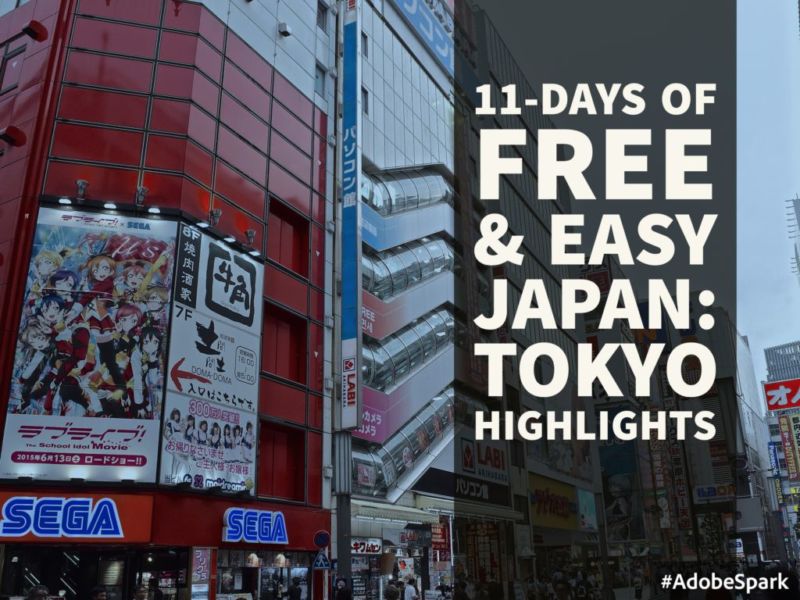
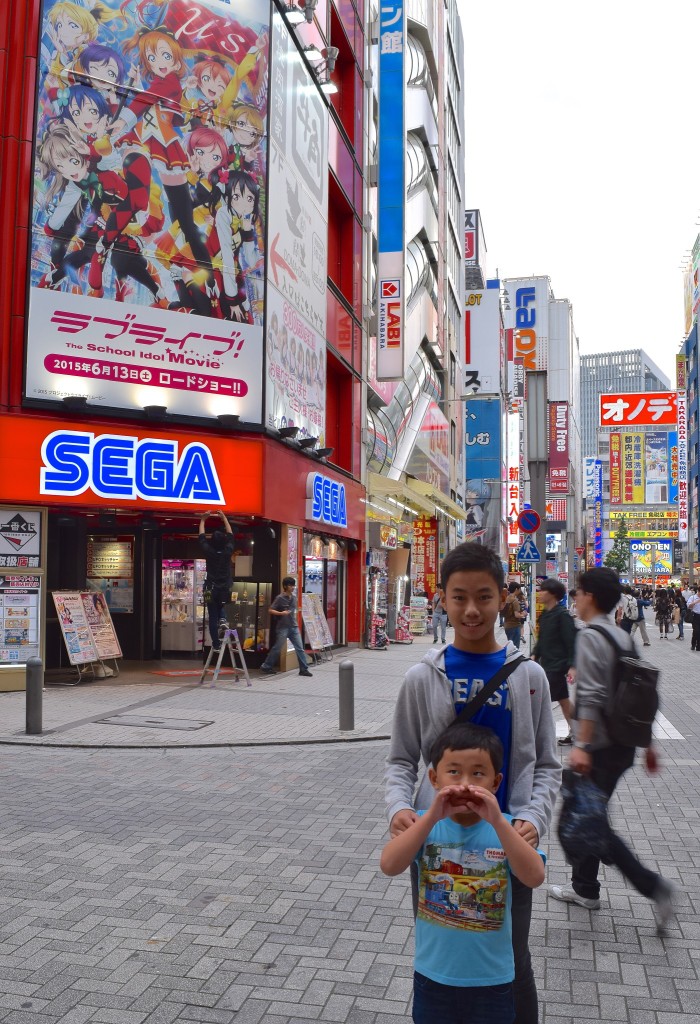
Akihabara is the “mecca” of anime, manga and electronics in Japan.
The area surrounding Akihabara station is filled with both large malls and small street shops selling a gigantic range of anime/manga and electronics products/services. Both anime/manga fanatics and electronics geeks will be thrilled to the max and have no problem spending hours (if not days) on end ploughing through the streets and malls in the area.
Most of the business activities seems to be concentrated on the west side of Akihabara station. The Sega building is located next to the station and a number of other small-to-mid-sized malls occupy the surrounding area, most dealing with anime/manga goods.
As I ventured a few blocks westwards (from Sega) along the train rails, I came across a few side streets populated with small electronics shops dealing in tools, components, devices and such. Shops that used to fascinate me back when I was an electrical undergraduate.
Maid Cafes
Throughout the entire area, there are plenty of promoters from the various maid cafes giving out flyers and advertising for their businesses. Not surprising given that the earliest maid cafes were born right here in Akihabara.
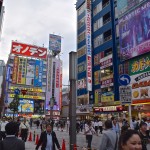
Electronics Paradise
The huge Yodobashi mall is located opposite the eastern exit of Akihabara station. (map)
Yodobashi is one of Japan’s most famous and largest electronics store. With up to 7 levels of shopping at its Akihabara branch, shopaholics would take forever to comb the entire store. For tourist, tax rebates are available. The store also employs a huge number of Chinese staffs for the increasing Chinese market.
If you’re looking to buy photography gears for your trip, make Akihabara one of your first stops in Japan to stock up on them! This was exactly what I did! =)
Advertisements
#2: Shinjuku Gyoen National Garden (info) (map)
“Completed in 1906 as an imperial garden… With 58.3 ha(144 acres) in size and a circumference of 3.5 km, it blends three distinct styles, French Formal Garden, English Landscape Garden and Japanese Traditional Garden, and is considered to be one of the most important gardens from the Meiji era.” (Source: www.env.go.jp)
Entrance to Shinjuku Gyoen National Garden
There are 3 entrances to the garden. I recommend using the Shinjuku entrance (entrance nearest to Shinjuku station).
Entrance fee is payable: 200yen for adults. 50yen for children.
Once pass the entrance, look out for signboards that map out the recommended walking route so that you’ll cover most of the important sights.
I made the mistake of entering the garden via the Sendagaya gate (southern gate near Sendagaya station) and missed the recommended walking route map. After spending 2hours strolling around the Japanese garden section, i saw the map at Shinjuku entrance and realised that I’ve missed out exploring the English and French sections. By then it was near to closing time and I missed the chance to explore these two sections.
Exploring Shinjuku Gyoen National Garden
The Japanese Traditional Garden is tastefully done up, as to be expected. There is an elegant Taiwanese Pavilion nested on the edge of a large pond, which makes for a great photo shoot. Facing the Taiwan Pavilion is a tea house situated at the top of a gentle slope. A further stroll eastwards would bring you to more ponds with Japanese style bridges. The atmosphere is truly relaxing and peaceful.
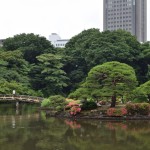
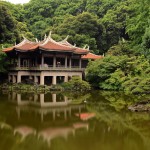
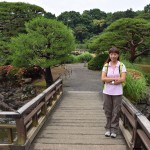
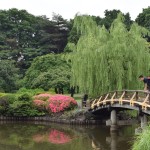
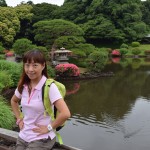
Overall, I find the garden very pleasant and charming, though not as beautiful as I imagined it to be; probably due to my season of visit (June, mid-Summer).
Official website and visiting info (click here)
Advertisements
#3: Tokyo DisneySea (info) (map)
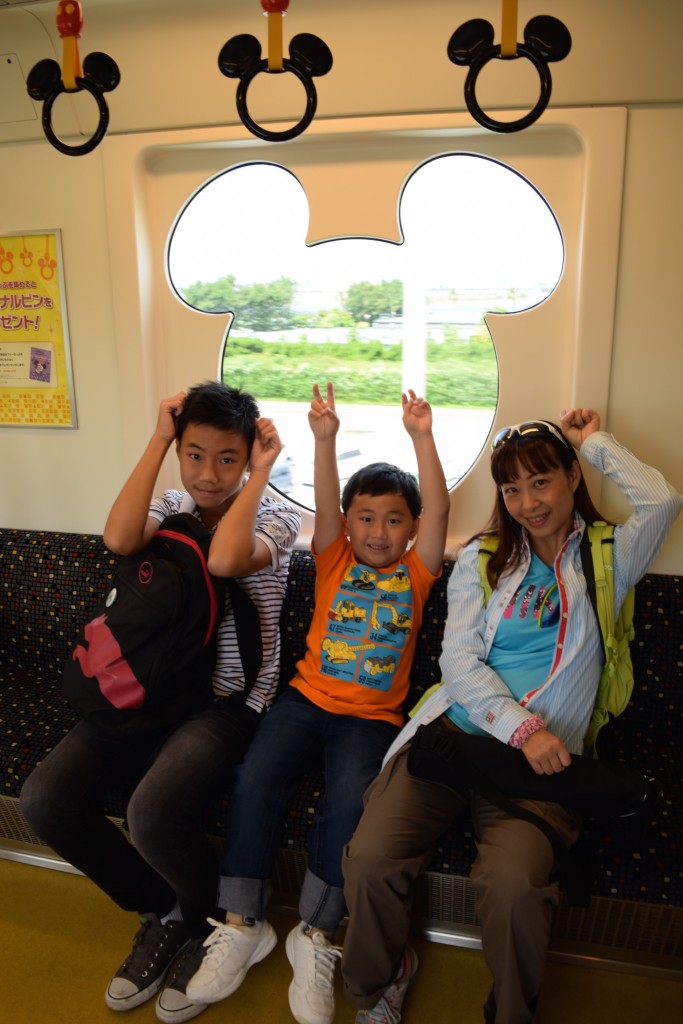
Tokyo Disney resort is located in Chiba prefecture, just outside Tokyo. Within the resort, there are 2 theme parks, namely: Disneyland and DisneySea.
Before my trip, I consulted a friend who is working in Chiba for her advice on which theme park to visit. Her reply was swift: “DisneySea wins hands down”. I promptly took her advice and on hindsight, I was glad I did!
Unique to Japan, Tokyo DisneySea is designed to cater slightly towards adult audiences; though I would say that most of the rides and attractions suit the kids (6years old and 14years old) really well.
“Tokyo DisneySea attracted an estimated 14 million visitors in 2013, making it the fourth-most-visited theme park in the world.”, “Tokyo DisneySea was the fastest theme park in the world to reach the milestone of 10 million guests, having done so in 307 days after its grand opening.” (Source, Wikipedia: Tokyo DisneySea)
Pre-Trip Tips:
- Online ticket purchase (eTicket website) is possible. You could purchase the tickets online in advance (date of visit must be stated) and print them at home. Once at the park, proceed directly to the park entrance without having to queue up at the ticketing booths. It is possible to change the date of visit via online before your visit at no extra cost.
- For those thinking of lugging along a camera tripod, forget it! Camera tripods are not allowed to be used in the park.
- Bring water bottles along; there are plenty of water dispensers in the park. Save you the need to purchase drinks!
- While in the park, the free Disney FastPass system allows visitors to gain direct entries onto certain more popular rides at specifically allocated times. Click here to understand how the FastPass system works. This is important as you want to use your FastPass to “reserve” a popular ride as soon as you enter the park and plan (prior to visit) what are the rides that you’ll use your FastPass on.
- Bonus Tip: Soon after you enter the park, look out for a “Park Information Board” in front of “Merchant of Venice Confections” in the Mediterranean Harbor area. This board shows the current queuing time for all rides. Use this to determine which are the most worthy rides to collect your FastPass!
- During peak season, the crowd to both Disney theme parks can be notoriously huge with queuing time for rides easily more than an hour. Thus, choosing an off-peak season to visit is crucial. Click here for the link to DisneySea’s crowd calendar. (for Disneyland’s crowd calendar, click here)
How to reach (access info):
- Tokyo Disney resort is approximately 15 minutes train ride from Tokyo Station, via JR Keiyo Line. Alight at JR Maihama station.
- Once at Maihama station, take a short walk to Resort Gateway station for transfer to the “Disney Resort Line” (this is the internal rail of Disney Resort). (resort rail info) (Pasmo/Suica cards accepted)
- Disney Resort Line is a looping service and DisneySea is the last station in the loop; ~10 minutes from Resort Gateway station.
Themed Areas in DisneySea (info)
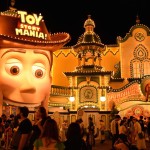
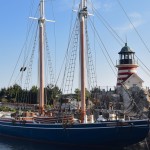
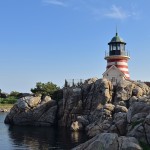
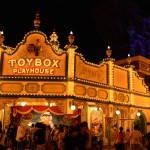
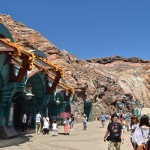
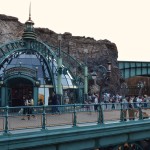
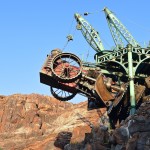
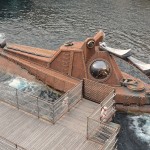
Tokyo DisneySea is divided into 7 themed areas (DisneySea park map), namely:
Theme#1: Mediterranean Harbor
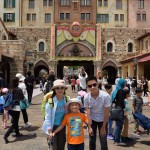
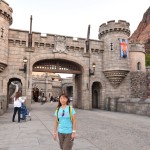
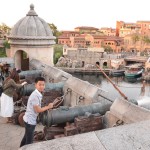
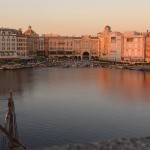
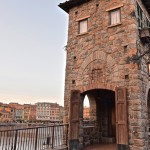
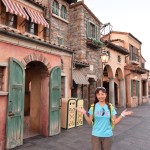
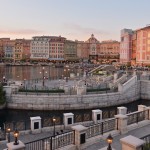
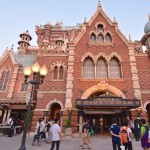
Theme#2: American Waterfront
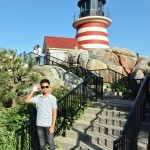
Advertisements
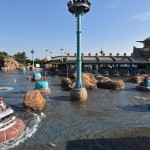
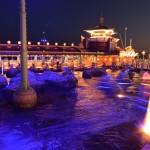
Theme#3: Port Discovery
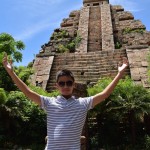
Theme#4: Lost River Delta
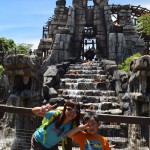

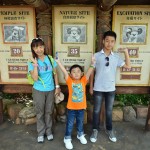
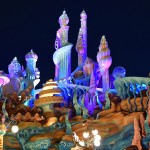
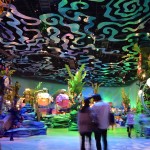
Theme#5: Mermaid Lagoon
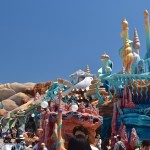
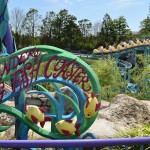
Advertisements
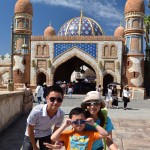
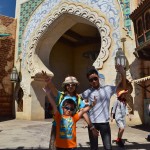
Theme#6: Arabian Coast
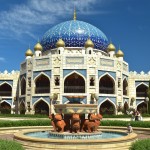
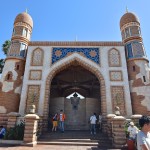
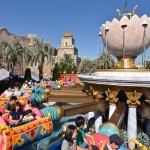
Theme#7: Mysterious Island
Advertisements
My visit
The importance of choosing an off-peak season to visit the park cannot be over-emphasized (refer to my Pre-Trip Tips above). Get it wrong and you’ll end up spending most of your time queuing up for rides and getting squashed like sardines.
I was lucky to visit in early June; traditionally, the immediate period after the Japanese Golden Week (early May) is off-peak season. It helps too that it was raining most of the week EXCEPT the day that i was in DisneySea; talk about luck!
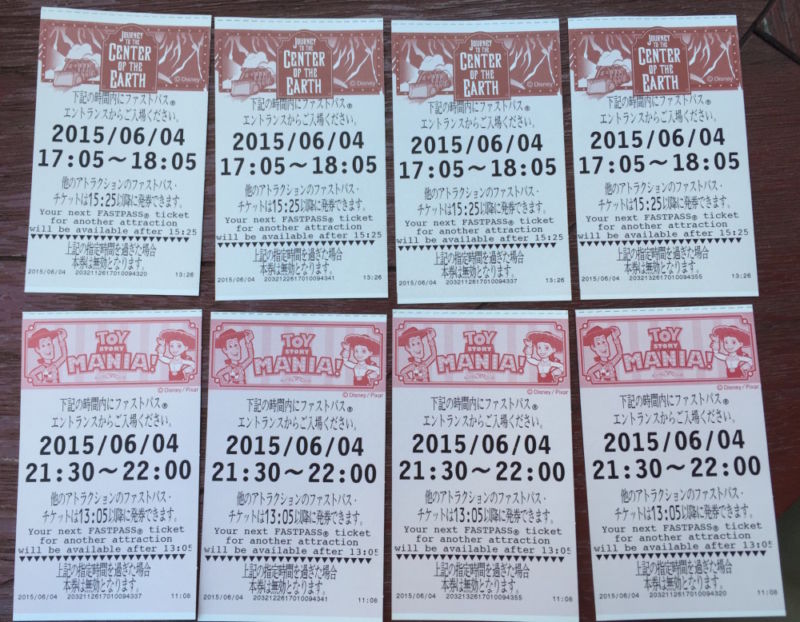
On the day of my visit, the crowd was very manageable. For most non-FastPass rides, the queue was around 15-20 minutes maximum. After entering the park, I gathered that Toy Story Mania has the longest queue; it doesn’t take a genius to figure out that I should get my first FastPass there! I reached Toy Story Mania at 11am to get the FastPass, and I was already assigned the last slot of 9.30pm-10pm; park closes at 10pm. Imagine the queue!
On reflecting, I didn’t plan my FastPass strategy wisely, and only managed to obtain FastPass for Toy Story Mania and Journey to the Center of the Earth. However, due to the thin crowd on the day, I was able to cover ~80% of all rides (with some rides done multiple times) after spending ~11hours in the park. Pretty impressive!
Best ride: Toy Story Mania
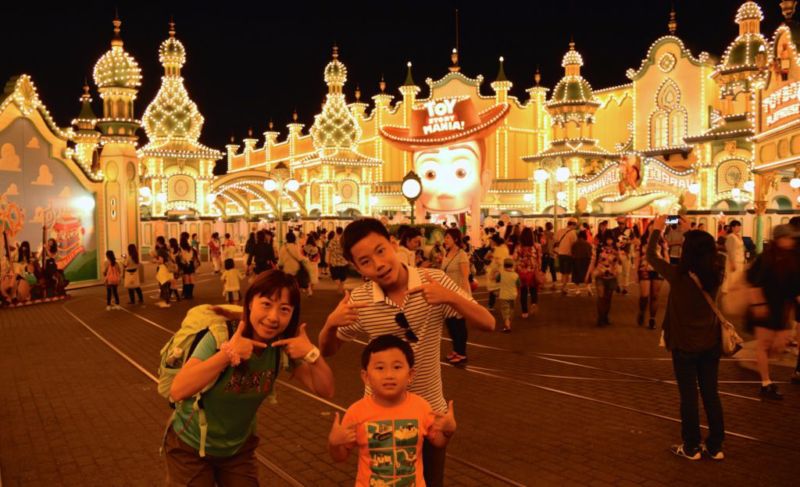
Of all the rides, I find Toy Story Mania the best; little wonder the extreme waiting time. It is an interactive ride where the participants play an active role by shooting various targets. The rest of the rides in the park are essentially “passive” rides; requiring little or no input from the participants. Absolutely no regrets for using FastPass on Toy Story Mania!
Advertisements
#4: Sensō-ji temple(info) (map)
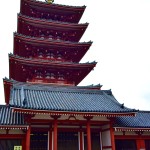
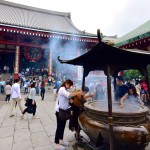
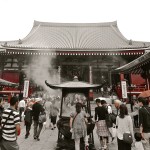
Completed in 645AD, Sensō-ji is Tokyo’s oldest temple. it is one of the most significant Buddhist Temple in the country and is devoted to the Buddhist deity Bodhisattva Kannon. Being popular with tourist and locals alike, it is extremely crowded on most days. Having stayed at a hostel beside the temple, I had the chance to pass by it on a number of occasion and it is always crowded with camera touting tourists.
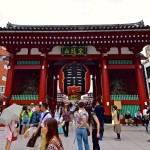
After passing the temple’s first gate, you will find a 250m shopping street known as Nakamise Dori which leads up to the temple’s second gate. It is said to be one of the oldest shopping streets in Japan and the shops mainly carry tourist related items such as Japanese snacks and souvenirs.
Though not particularly huge, the temple is nevertheless charming. The constant huge crowd of casual visitors happily snapping photos mixing with the revered devotees performing their religious routines add an intriguing dimension to the atmosphere.
Sensō-ji can be reached via a short walk from either Toei/Tokyo Metro Asakusa station (Asakusa and Ginza lines), or the Tsukuba Express Asakusa station. Note that these 2 stations are on opposing ends of the temple.
Sights at Sensō-ji
Advertisements
#5: Shibuya (info) (map)
Shibuya is a famous shopping district in Tokyo for its focus on youth fashion.
“Shibuya is a center for youth fashion and culture, and its streets are the birthplace to many of Japan’s fashion and entertainment trends.” (Source: www.japan-guide.com)
There are plenty of fashion and large departmental stores in the vicinity of Shibuya station, and the streets are swarmed with shoppers even on the weekday night that i was there.
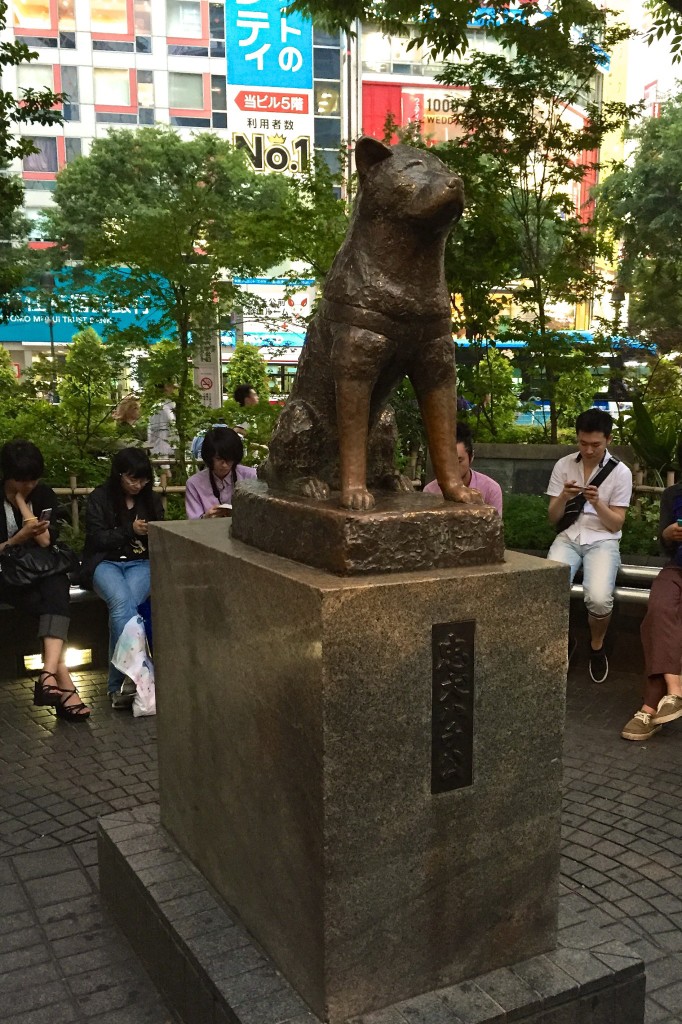
Shibuya’s not only famous for shopping; the well-known Hachikō Statue is located (map) at the Hachikō exit of Shibuya station. For those not informed, Hachikō is the famed Japanese dog that for more than 9 years faithfully waited daily for his owner at Shibuya station not knowing his owner had passed on. Click here to read more about this amazing dog. (Hachikō himself passed on in 1935) Nowadays, the open area around Hachikō Statue is used as a meeting point for Japanese youths/young adults waiting for their friends.
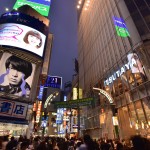
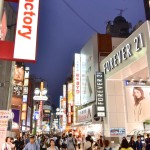
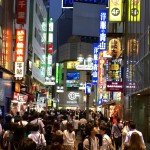
Just beside Hachikō Statue is another famed site: the Shibuya Crossing. The renowned Shibuya Crossing, which was featured in a number of movies and shows, is considered by some to be the world’s busiest intersection crossing (pedestrian crossing). With a backdrop of huge neon signboards and video screens, the crossing is a sight of utter chaos every few minutes when the traffic lights turn red and the mob of pedestrains flood into the crossing.
I’ve personally not seen an intersection as much photographed as this. Everywhere I turn, I see determined visitors anxiously clutching onto their cameras and iPhones waiting for the next red light to release mayhem. Hardly has any traffic junction been more interesting.
Tip to capture the sight
One great place to record video of the junction is at the 2nd level of the Starbucks cafe directly facing it. The cafe is housed in a mall beside the junction with its glass panels strategically facing the junction. Though be warned that the cafe is extremely crowded as to be expected. (see video below)
Advertisements
Accommodation in Tokyo: Sakura Hostel
If you’re looking for lower cost accommodation in Tokyo, consider Sakura Hotel & Hostel**. They have a few locations in Tokyo and the rates are reasonable. I stayed at their Asakusa branch (5 minutes walk from Sensō-ji temple) for 2 periods, totalling 7 days.
Access from Narita is relatively quick and easy (~1hour). This helped by the fact that the train from Narita stops directly at Tokyo Metro’s Asakusa station, which is about 10-15 minutes walk away. Access to other parts of Tokyo is easy; the Tsukuba Express’s Asakusa station is only 5-7 minutes walk away and it links to Akihabara in below 10 minutes. From Akihabara, access to other lines in Tokyo is easy.
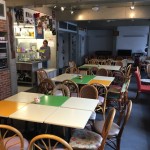
The rooms, toilets/showers, general facilities and bedding are in clean and great condition. Their staffs are helpful and friendly. Wi-Fi is free with reception and speed both good. If you’re having 4 or more pax in your group, you could reserve entire rooms so that you don’t have to share it with others.
Overall, I greatly recommend them based on location, cost and condition of the hostel. There’s really nothing about them that I do not like!
Link to Sakura Hostel (Click Here). (**Disclosure: This is an affiliated link. It will cost nothing to you, but we do receive a small fee if you book through this link. This small fee will go a long way to help us maintain this blog.)
Help us! Share it!
If you find this “Free & Easy Japan: Tokyo Highlights” blog useful, do help us to share it with your friends! We’ve taken great efforts to produce this blog and appreciate any efforts by kind readers like YOU to help spread the travel blog. Thanks!
For more Japan related Travel Blogs
Below is the list of our travel blogs on other popular destinations in Japan.
- 11-Days Free & Easy Itinerary for Tokyo, Osaka, Kyoto, Hakone
- Osaka Highlights (Free & Easy Japan)
- Kyoto Highlights (Free & Easy Japan)
- Hakone Highlights (Free & Easy Japan)
- Okinawa Travel VLOG 2019
- 4 Great Tips for your Japan Holiday
Free & Easy Itinerary for Japan (11-Days of Tokyo, Osaka, Kyoto, Hakone)
Find this article (free) in GPSmyCity app
Download this article to your mobile device for FREE. This article is available within the GPSmyCity travel app. Once the app is installed, search for the article name and save it for your offline usage! You could also upgrade (small fee) the article to get a map with GPS navigation to the sights. The map + GPS navigation can be used offline. Thus saving you money from mobile data!
Disclosure: We do receive a small royalty fee whenever someone upgrades our travel article. This fee goes a long way in helping us to maintain this travel blog. So that we can continue to do what we do best; inspiring the traveler in YOU!
Leave a Reply